
On-site PV and renewable integration
Roof and perimeter photovoltaics, direct PPAs and on-site battery buffering reduce grid dependency and stabilize cost. Designed for Nordic, Atlantic and Continental climate zones alike.
A reference blueprint for the data center of the AI era — on-site photovoltaics, advanced liquid cooling and waste-heat recovery into district networks. Designed to be replicated in any digital hub from the Nordics to the Mediterranean and beyond.
A data center should not be a black box that burns electricity and dumps heat. It should be a district-scale energy asset — producing its own power where it can, and returning the rest as usable heat to the city next door.Wolfgang Beick · President, ITC Europe
The data center industry is entering a step change. AI workloads, the cloud and edge processing will push global data-center electricity consumption from roughly 460 TWh today toward 1,000 TWh by 2030 (IEA). In parts of Europe — Ireland, the Nordics, Frankfurt — data centers already consume more than 15% of national grid capacity.
The question is no longer can we build more. It is how we build them — so that compute growth does not cancel out Europe's climate progress. Every new facility built to the old playbook locks in decades of inefficient cooling and wasted heat.
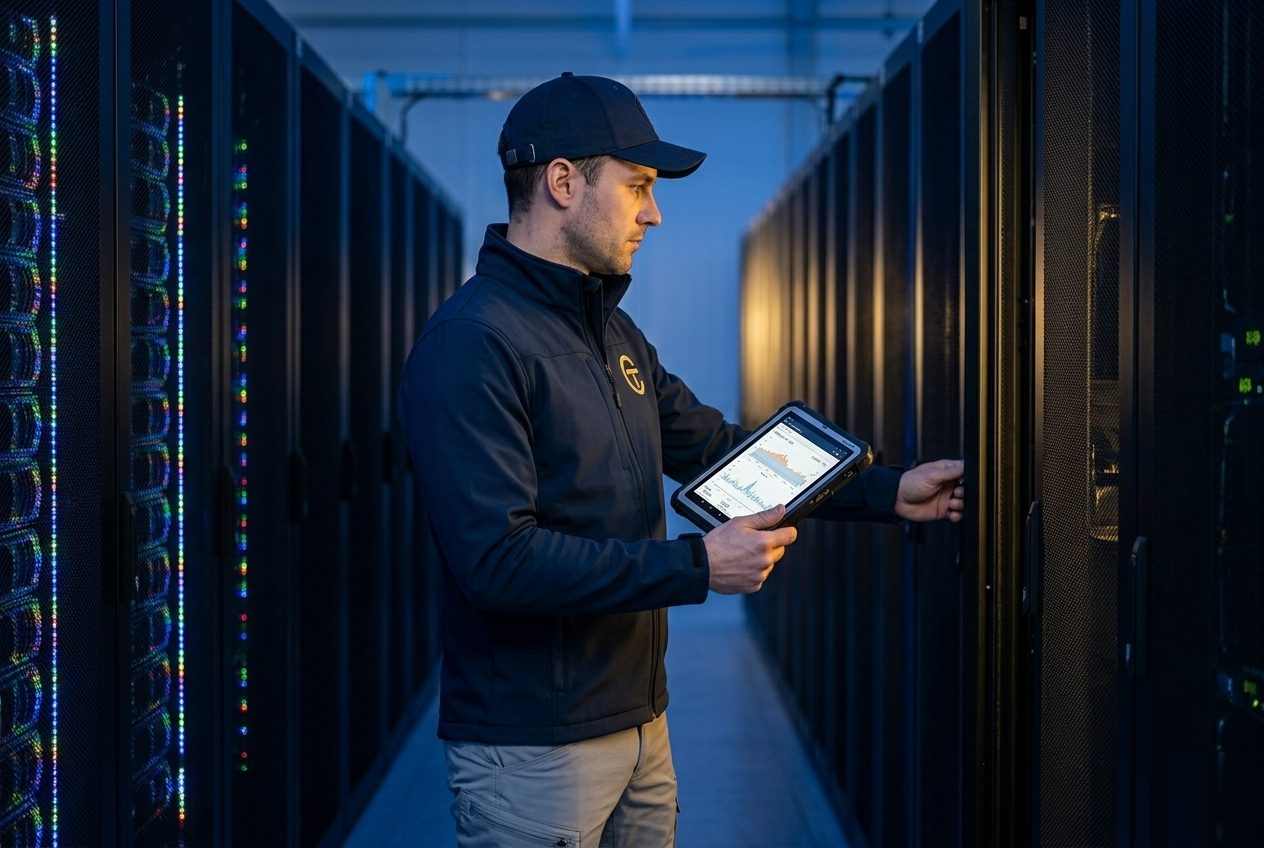
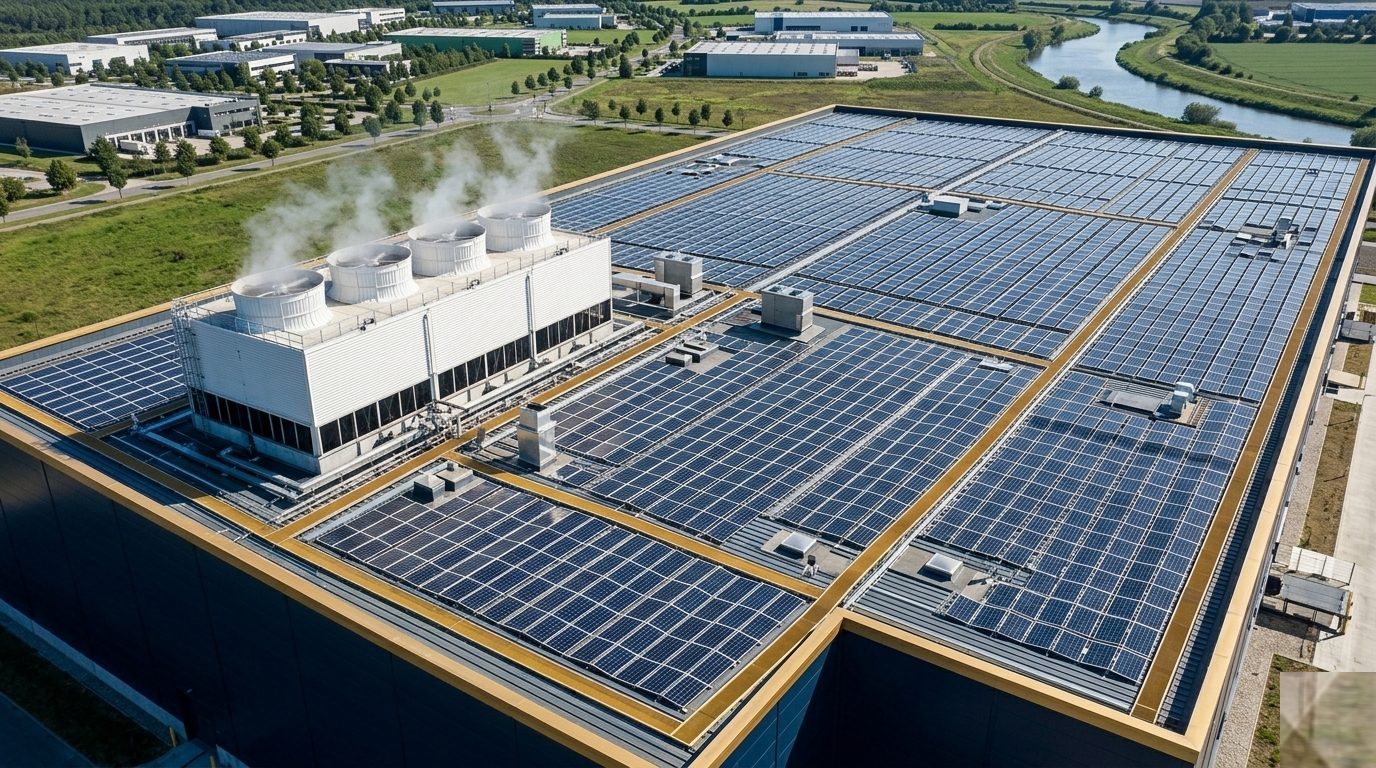
The same architectural principles — renewable integration, liquid cooling, heat recovery — scale from an edge node to a regional hub to a hyperscale campus.
Most of the efficiency gap between today's average data center and the theoretical optimum comes down to three engineering decisions — usually made in isolation. We design them as a single system.
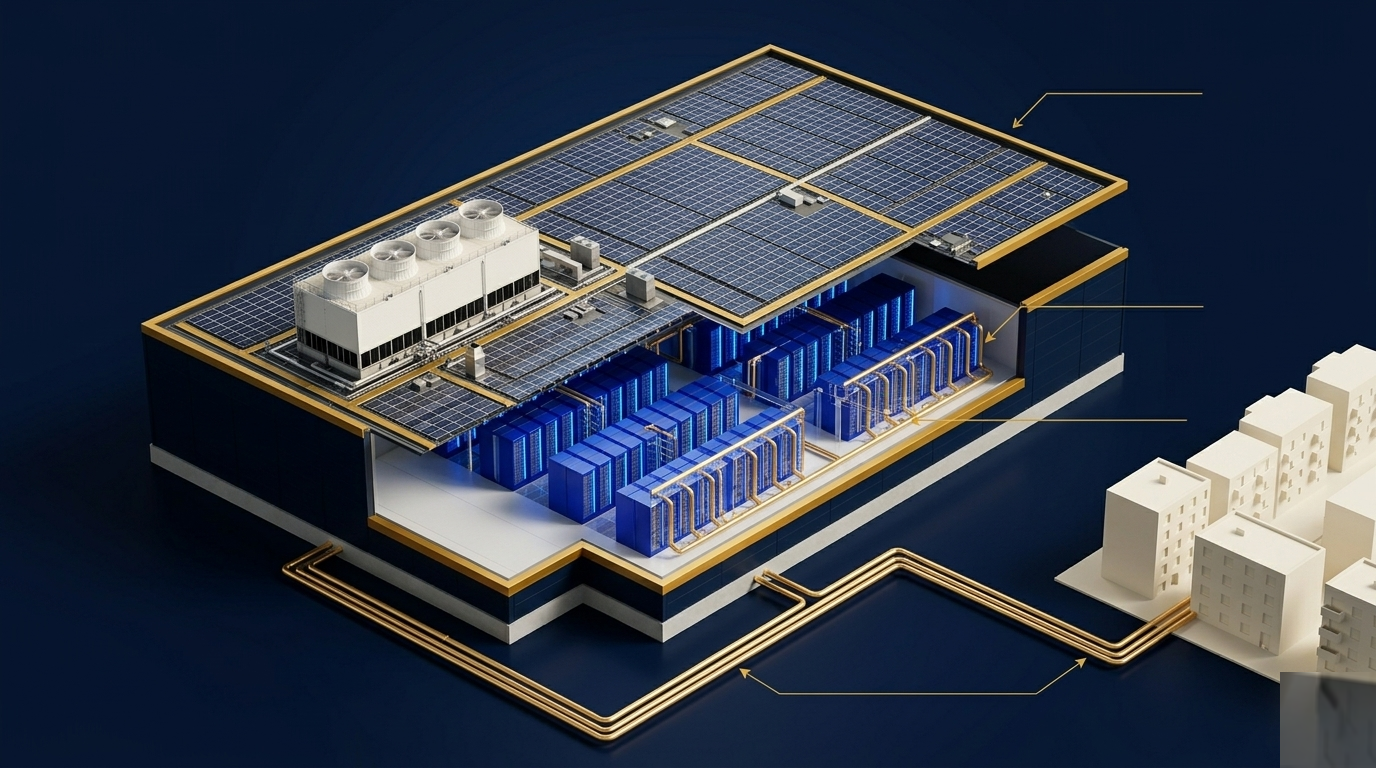
Roof and perimeter photovoltaics, direct PPAs and on-site battery buffering reduce grid dependency and stabilize cost. Designed for Nordic, Atlantic and Continental climate zones alike.
Direct-to-chip liquid cooling, rear-door heat exchangers and climate-appropriate free cooling bring PUE below 1.2 while enabling much higher rack densities for AI workloads.
Low-grade heat (35–55 °C) is captured and fed into local district heating, industrial pre-heating or greenhouse clusters — turning a thermal loss into a contracted revenue stream.
Indicative figures based on current European typologies. All numbers are order-of-magnitude guides for early conversations, not engineering commitments.
| Scale | IT load | Target PUE | Heat export potential | Typical context |
|---|---|---|---|---|
| A · Edge | 1 – 5 MW | ≤ 1.25 | 5 – 25 GWh/yr | Urban edge node, local district heating link |
| B · Regional | 5 – 30 MW | ≤ 1.20 | 25 – 150 GWh/yr | Regional cloud hub, industrial park symbiosis |
| C · Hyperscale | 30 – 100 MW+ | ≤ 1.15 | 150 – 500+ GWh/yr | Full PV + wind PPA, metropolitan heat off-take |
Operators building the next generation of facilities, willing to commit to PUE < 1.2 and heat-export from day one.
Municipal and industrial heat network operators looking for a stable, low-carbon base-load input of recovered heat.
Utility partners, PV and wind developers, storage providers and PPA structurers that can match a 24/7 data load.
Infrastructure funds, project developers and EPC partners co-leading the engineering phase alongside ITC Europe.
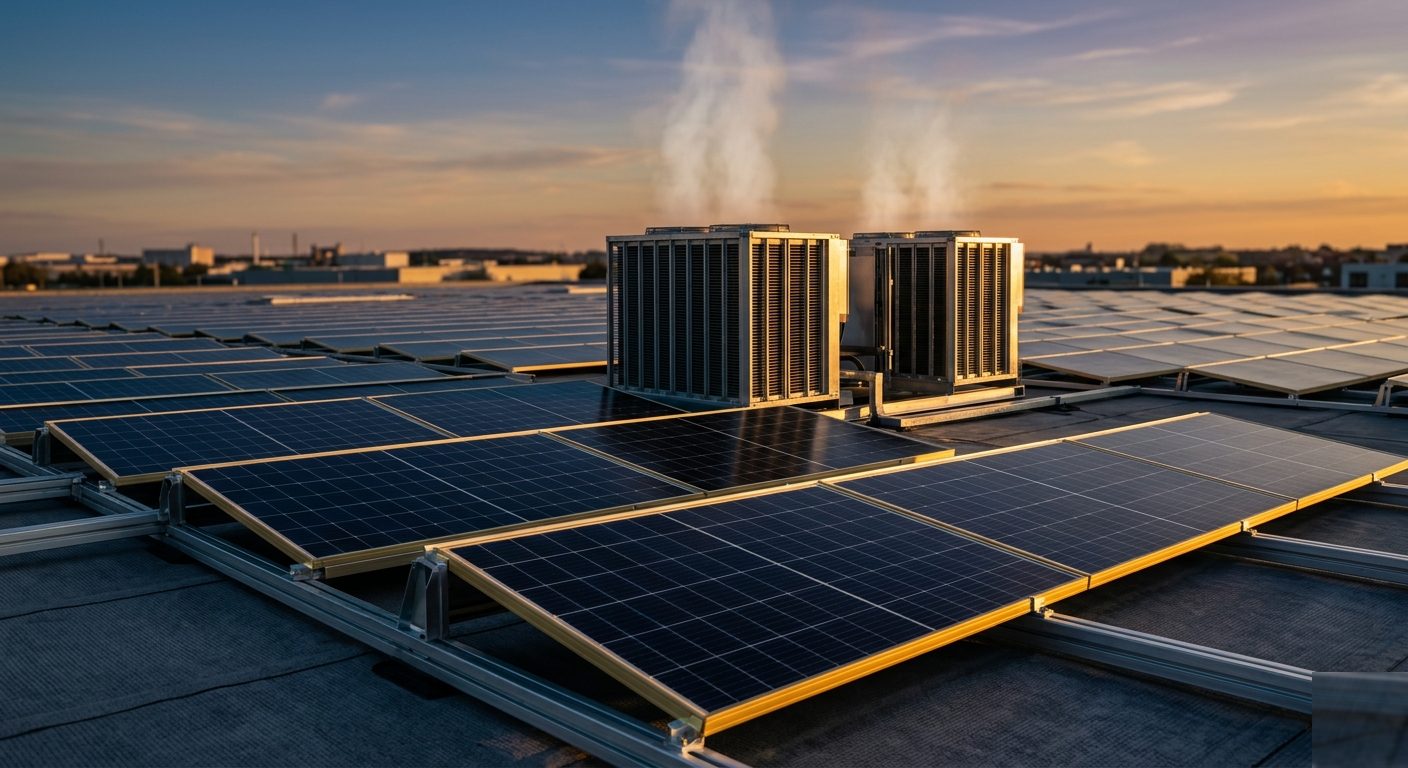
Integrated PV canopies, adiabatic coolers and heat exchangers sized for the local climate — no two sites are the same.
A 30-minute conversation to see if the scope, geography and timeline fit your organisation.
We map the parts of the programme you can operate, co-fund, off-take or supply. Technical leads from both sides take part.
A bounded study (3–6 months) producing the numbers needed for an investment decision or a public funding bid.
If the pre-feasibility lands, the partners form a consortium to carry engineering, permitting and financing.
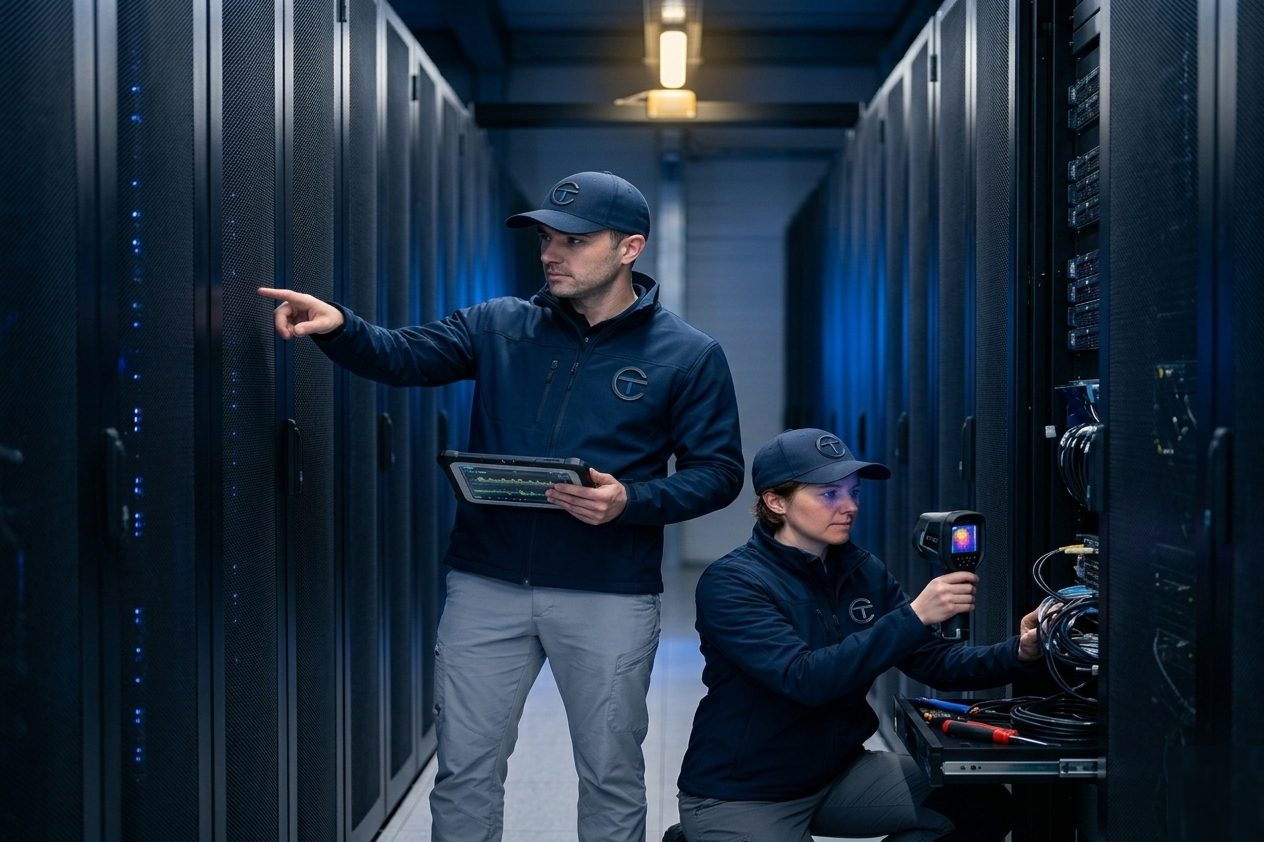
20+ years of energy audits in banking, industrial and data-center environments inform every parameter in this concept.
We treat every serious message as a conversation, not a pitch. Tell us briefly who you represent and what part of the programme you are curious about — we will come back with a short, specific reply.
Working languages: English · German · Polish.